How do you tell if your roof has hail damage?
To tell if your roof has hail damage, start on the ground: dents on your AC unit, gutters and downspouts, cracked skylights, and broken tile pieces or shingle granules in the yard all mean the hail was big enough to hit the roof too. On the roof itself, hail cracks tile, bruises shingles and dings foam coatings, and much of it can't be seen from below.
That's why the safest next step after a hailstorm is a free roof checkup, even when nothing is leaking yet. Here's what to look for, what isn't hail damage, and what a roofer checks for you.
Start on the ground: the signs you can see safely
You don't need to climb a ladder to learn a lot. Hail leaves marks on softer metal and glass around your home first, and those marks tell you how hard the roof was hit. The Insurance Institute for Business & Home Safety calls this collateral evidence: spatter marks or dents on AC units, gutters, metal flashing, downspouts and patio furniture.
- Dents or dings on the AC condenser, especially a rooftop unit
- Dents in gutters, downspouts and window screens
- Cracked or punctured skylights
- Pieces of broken tile, or piles of shingle granules, under the roof edge or at the downspouts
- Chipped paint or pockmarks on stucco, fences and patio covers
- Fresh dents on cars that were parked outside
If you see these, the hail was big enough to damage a roof. One Valley caller after the October storms put it plainly: hail "went through my skylight and tore my air conditioner up, and I got big old chunks out of my roof."
What hail damage looks like on each roof type
Most hail guides are written for asphalt shingles. In the Valley, many homes have tile, foam or flat roofs, and hail shows up differently on each.
Tile roofs
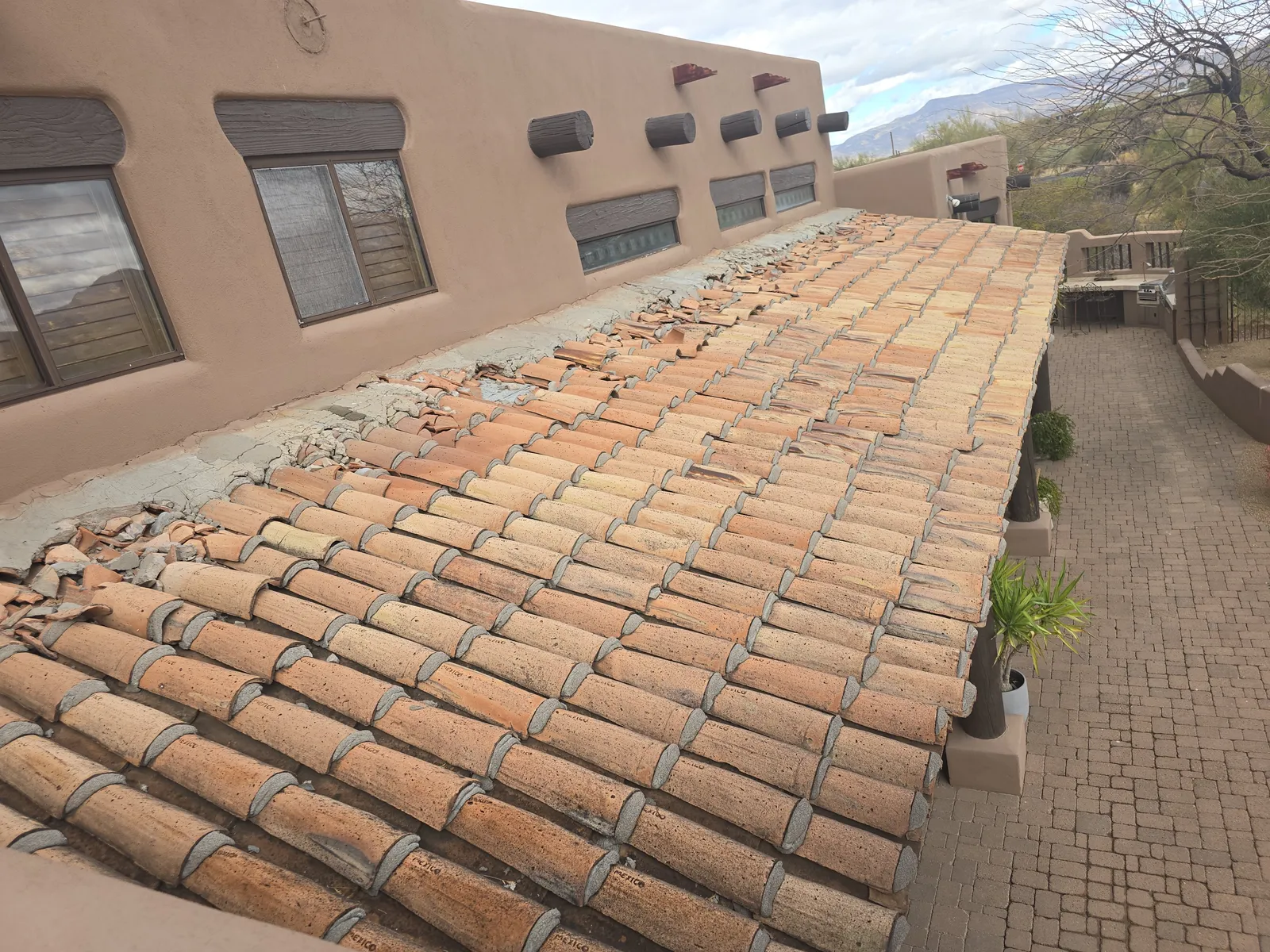
Concrete and clay tile either crack or they don't. Look for broken corners, cracks across the tile, and pieces on the ground. A single cracked tile matters more than it looks: it opens the underlayment underneath to the sun and the next rain. Read more on tile roof repair.
Asphalt shingle roofs
On shingles, hail leaves round dark spots where granules were knocked off, soft "bruised" spots, and cracks. IBHS notes the marks fall in a random pattern and that ridge caps are especially vulnerable. From the ground, the clearest clue is a heavy pile of granules at the bottom of your downspouts.
Foam and flat roofs
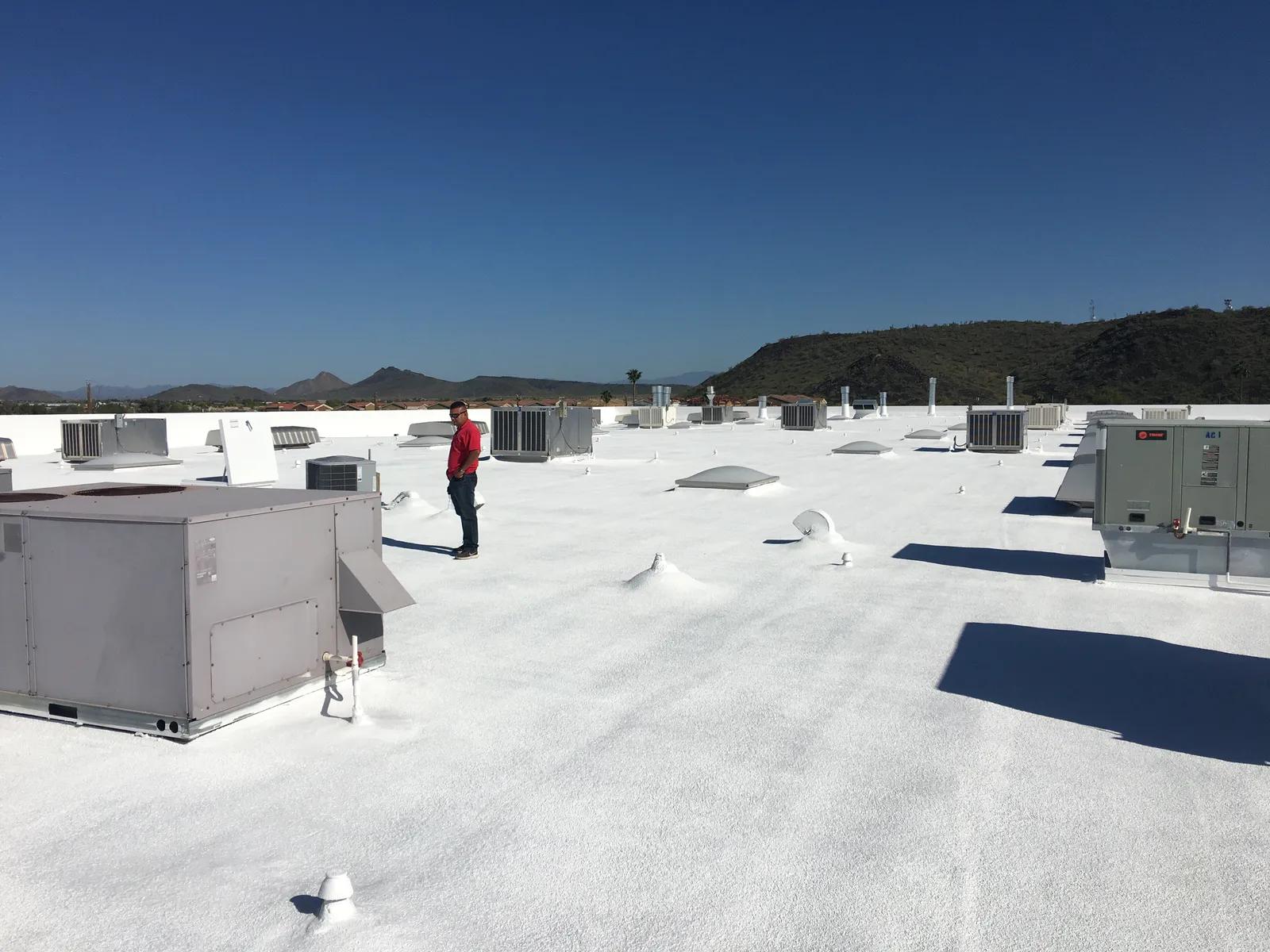
Hail can dent or puncture the protective coating on a foam roof and leave the foam underneath exposed to the sun. One caller described it as "some blister spots and some hail dings." Exposed foam breaks down quickly in Phoenix UV, so dings that look small should still be sealed. See our foam roofing page for how coatings protect the foam.
Vents, flashing and skylights
Metal vent caps and flashing dent easily, and plastic skylights can crack. These are also the spots where water gets in first, so they're worth a close look after any storm.
What isn't hail damage
Not every mark on a roof came from the last storm. According to IBHS, these are common look-alikes:
- Granule loss along shingle edges from normal weathering
- Even, all-over wear or fading
- Manufacturer defects
- Marks left by tools, installation or foot traffic
- Granules knocked loose by heavy rain
In Phoenix, years of sun also crack and fade older tile and coatings. A roofer can usually tell old wear from fresh hail damage, because hail breaks are sharp and new, and they show up across the roof at once.
No leak doesn't mean no damage
Some people who call us after a hailstorm have no leak at all. They want to know what the roof looks like before the next rain finds it. Callers tell us things like "We haven't had anything leaking or anything" and "I just want to see if there's any roof damage."
That instinct is right. A cracked tile or a punctured foam coating often doesn't leak the same week. The water gets in later, during winter rain or the next monsoon, and by then it may have soaked the underlayment or the deck. Finding hail damage early usually means a smaller repair.
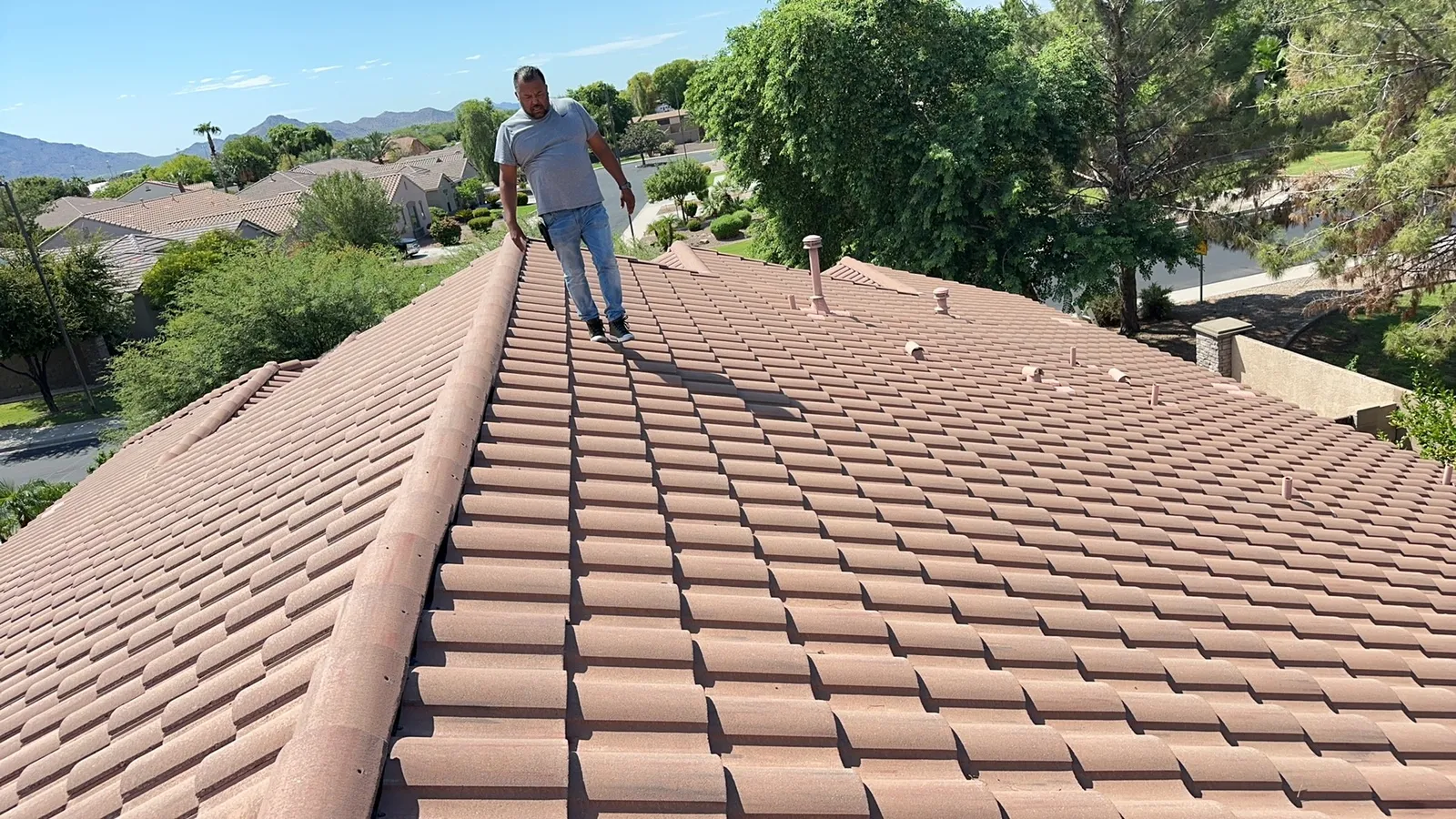
What a roofer checks after hail
A KY-KO roof checkup is free and comes with a written estimate if anything needs work. After a hailstorm, a roofer will:
- 1Walk the whole roof and check every slope, not just the side you can see
- 2Check tiles, shingles or coating for fresh cracks, bruises and dings
- 3Check vents, flashing, skylights and rooftop AC curbs
- 4Photograph and document what they find
- 5Tell you straight what needs repair now, what can wait, and what doesn't need anything
If you plan to file a claim, the photos and written findings help you talk with your insurer. Whether hail damage is covered is up to your insurance company and your policy, not your roofer. Our roofing insurance page explains how we document damage and work with adjusters.
Watch out for storm chasers
After big storms, out-of-town crews knock on doors across the Valley. The Arizona Registrar of Contractors warns homeowners to avoid contracting scams after storms and to check any contractor's license before signing. You can look up a license for free with the ROC contractor search.
For more storm signs, read 7 signs of monsoon roof damage. We serve all of Phoenix and the Valley.
Hail damage questions
Can hail damage a tile roof?
Does hail hurt a foam roof?
Should I go on the roof to check for hail damage?
My roof isn't leaking. Do I still need a checkup?
Had hail at your house?
Book a free roof checkup. We'll walk the roof, document what we find, and give you a written estimate if anything needs work.