Silicone or acrylic coating: which is right for a Phoenix flat roof?
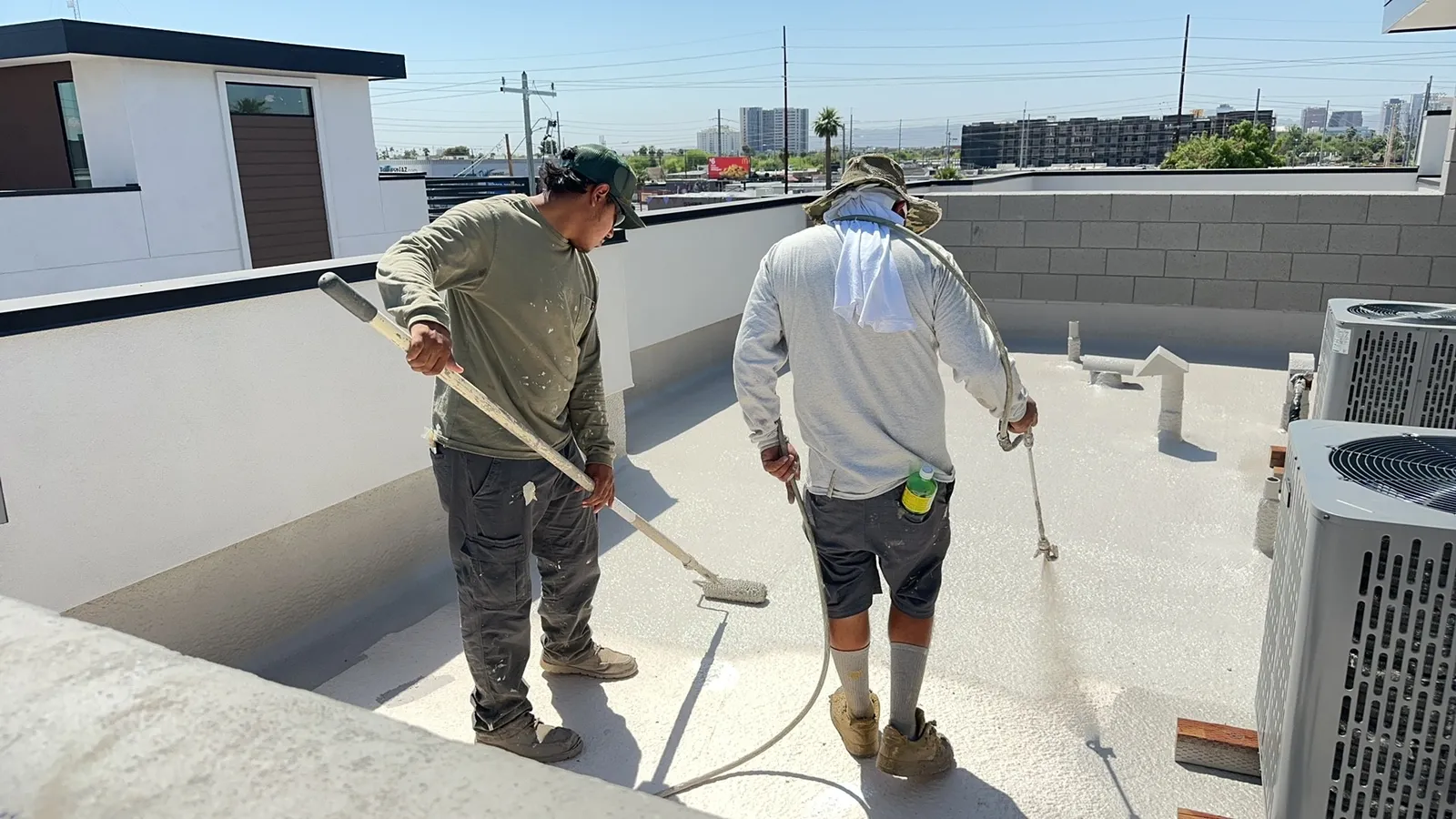
If your flat roof holds water after it rains, silicone is usually the safer coating. Acrylic coatings are water-based and break down where water sits. If your roof drains well, acrylic is a common, reflective choice. Either way, the coating only lasts if the roof underneath is prepared right and the coating goes on thick enough.
Here's how ponding water, Phoenix sun and what's already on your roof decide which coating fits your flat roof.
Silicone vs acrylic at a glance
| Silicone | Acrylic | |
|---|---|---|
| Base | Silicone (not water-based) | Water-based |
| Standing (ponding) water | Holds up well | Breaks down where water sits |
| Sun (UV) | Very stable in strong sun | Reflective, but wears thinner with age |
| Best for | Flat and low-slope roofs, spots where water ponds | Roofs that drain well, sloped surfaces |
This lines up with manufacturer guidance. CertainTeed says silicone is typically preferred for flat or low-slope roofs and areas prone to ponding water, while acrylic is best suited to sloped roofs and roofs with positive drainage.
Ponding water decides most Phoenix flat roofs
Ponding water is rain that sits in low spots on a flat roof instead of draining off. It often shows up near parapet walls, clogged scuppers and low spots that formed over time.
Callers describe it plainly. One said, "whenever it rains, it always pools. And then it just kind of blisters underneath that paint."
That's the key difference between the two coatings. An acrylic coating is water-based, so water sitting on it day after day softens and wears it away. Silicone isn't affected the same way. If your roof ponds, either the ponding needs fixing (better slope or drainage) or the coating needs to be one that can handle it.
Phoenix sun and heat
In the Valley, UV is the other big test. CertainTeed notes that in high-UV regions, silicone's inert nature gives it a major advantage. Acrylic coatings are bright and reflective when new, which helps keep a roof cooler, but manufacturers note they lose thickness as they age, so they need recoating on a regular schedule.
On a foam roof, the coating's job is to protect the foam from the sun. Once the coating wears through, the foam underneath breaks down quickly. Read why foam roofs fail early in Phoenix for the warning signs.
Why a roof coating fails early
"A few years ago a silicone coating was applied but did not last but a few years," one homeowner told us. When a coating fails fast, the product is rarely the only reason. The usual causes:
- Poor prep: coating over dirt, loose material or a damp surface, so it never bonds well.
- Too thin: not enough coating goes on, so it wears through early. A good written scope says how thick it will be.
- Wrong product for the roof: acrylic over a roof that ponds, or a coating that isn't compatible with what's underneath.
- Leaks not fixed first: coating over wet or damaged areas traps the problem instead of solving it.
- No upkeep: every coating needs checking and recoating on schedule.
What's under the coating matters
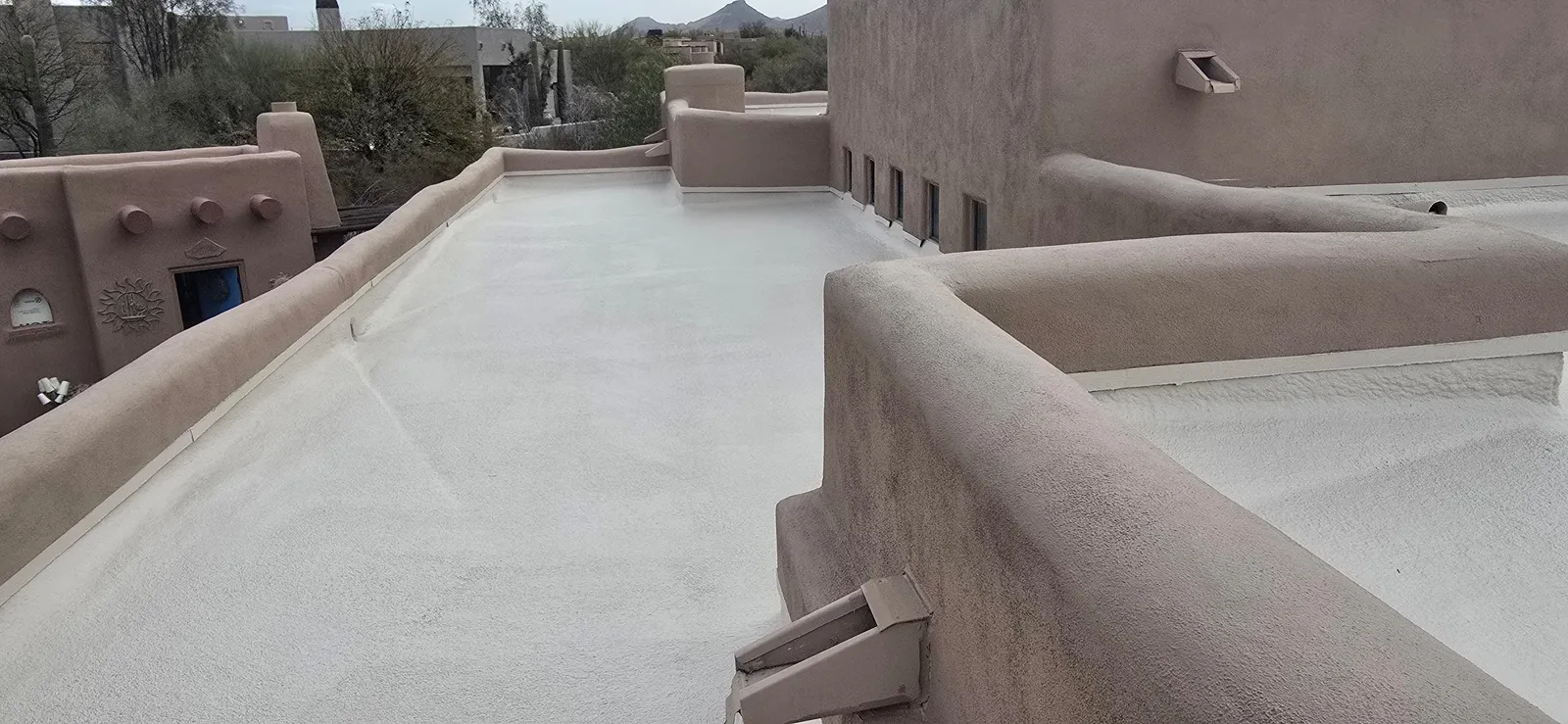
The coating protects the foam from UV. Recoating on schedule is what keeps a foam roof going. See foam roofing and when to recoat a foam roof.
Older flat roofs with separating seams or failing edges may need repairs first. A coating won't hold together a roof that's coming apart.
What's on the roof now affects what can go on next. Ask how a future recoat will bond before you choose a coating.
How to decide for your roof
- 1Find out whether your roof ponds, and where.
- 2Find out what's under the current coating: foam, rolled asphalt, torch-down or an older coating.
- 3Fix leaks and damaged areas before any coating goes on.
- 4Choose the coating that fits the roof, not the other way around.
- 5Get a written estimate that spells out prep, the product and how thick it will be.
A free roof checkup covers all of this, and you get a written estimate before any work starts. We coat and recoat flat and foam roofs across Phoenix and the Valley.
Roof coating questions
Is silicone or acrylic better for a flat roof in Arizona?
Why did my roof coating fail so fast?
Can you coat over a foam roof?
Does a white coating keep my house cooler?
Flat roof due for a coating?
Book a free roof checkup. We'll check for ponding and what's under your current coating, then give you a written estimate.