Water dripping from a ceiling vent when it rains: is it the roof?
If water drips from a ceiling vent, AC register or bathroom fan only when it rains, the roof is the most likely source. Rain gets in around a roof vent, pipe or rooftop AC opening, runs along the duct or framing in the attic, and comes out at the nearest opening in your ceiling. If the vent drips on dry days while the AC runs, it's usually condensation from the AC system instead.
Here's how to tell the two apart, where roof vents leak on Valley homes, and what to do before the next storm.
Rain or AC? The quick test
The fastest way to find the cause is to notice when the vent drips.
| When it drips | Likely source | Who to call |
|---|---|---|
| Only during or right after rain | A roof leak at a vent, pipe, exhaust cap or rooftop AC opening | A roofer |
| Heavy rain only, not light rain | A roof leak that only wind-driven or heavy rain reaches | A roofer |
| Dry days, while the AC runs | AC condensate: a clogged drain line, overflowing pan or sweating ducts | An HVAC company |
| All the time, even with the AC off | Possibly a plumbing leak | A plumber |
Many of our callers aren't sure at first. One told us, "It was water coming through one of the vents. I'm not sure if it's the ac." Timing usually settles it.
How rain ends up at a ceiling vent
Water rarely drips straight down from where it gets in. Once it's past the roof, it follows the easiest path: along the underlayment, down a rafter, or along the outside of a duct. Ducts and exhaust fans run straight to openings in your ceiling, so that's where the water shows up.
That's why callers describe the leak by the vent, not the roof: "During the rain, rain was coming in through my master bathroom, like the AC vent," one said. Another found "a little bit of water in our bathroom that came through the exhaust fan in the ceiling." Others saw it at a laundry room vent and a hallway AC filter vent.
Read how a ceiling wet spot reveals a hidden leak for more on how water travels inside a roof.
Where roof vents leak on Valley homes
Every vent, pipe and fan that passes through the roof needs a seal around it. In Phoenix sun, rubber pipe boots and sealants dry out and crack over time, and monsoon wind can loosen or tear off vent caps. These are the usual trouble spots:
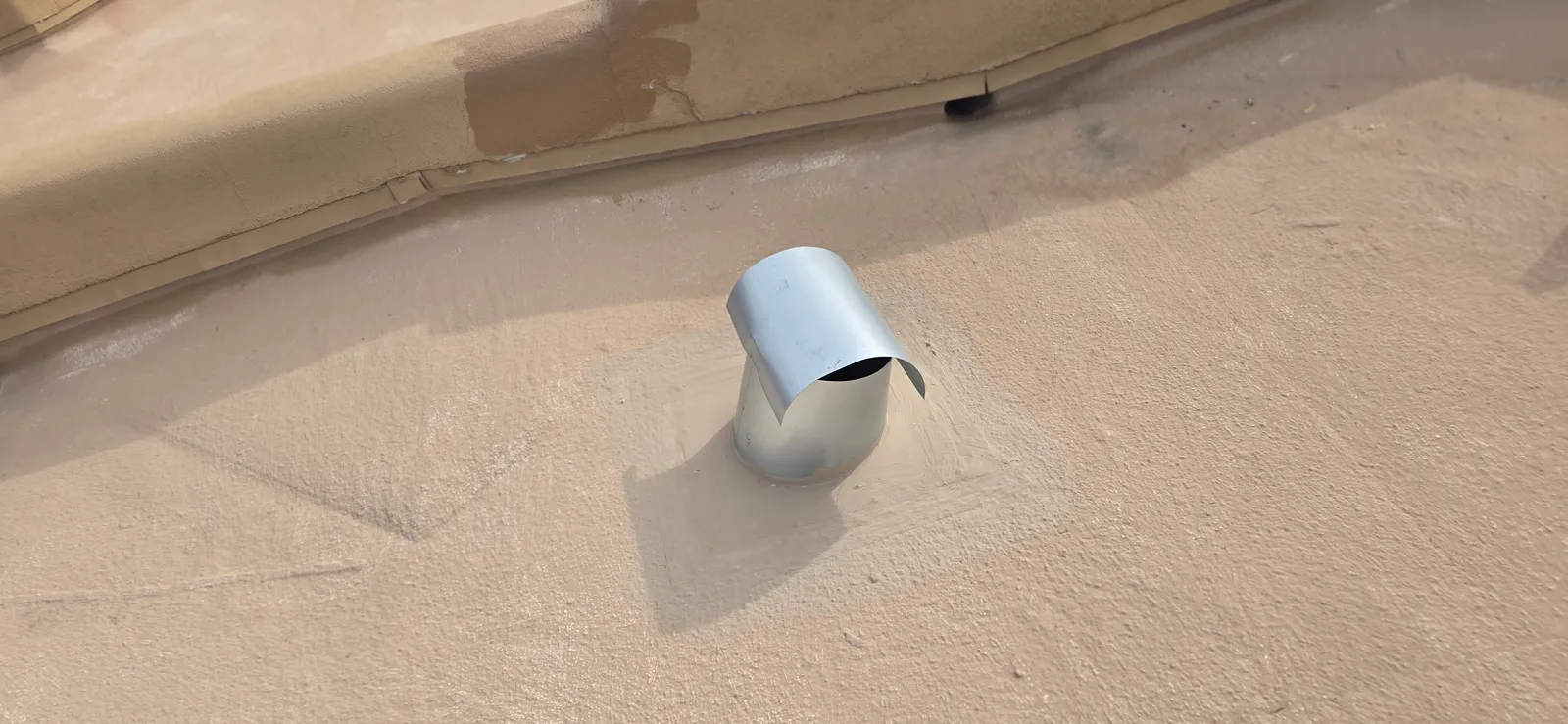
- Plumbing vent pipes: the flashing or rubber boot around the pipe cracks or pulls away.
- Bathroom and kitchen exhaust caps: caps loosen or blow off, and rain falls straight down the duct.
- Rooftop AC units and duct openings: on flat and foam roofs, the opening under a rooftop unit is sealed into the roof, and that seal can wear out.
- Ridge vents and turbine vents: storms can lift or fold back a ridge vent and let rain in along the peak.
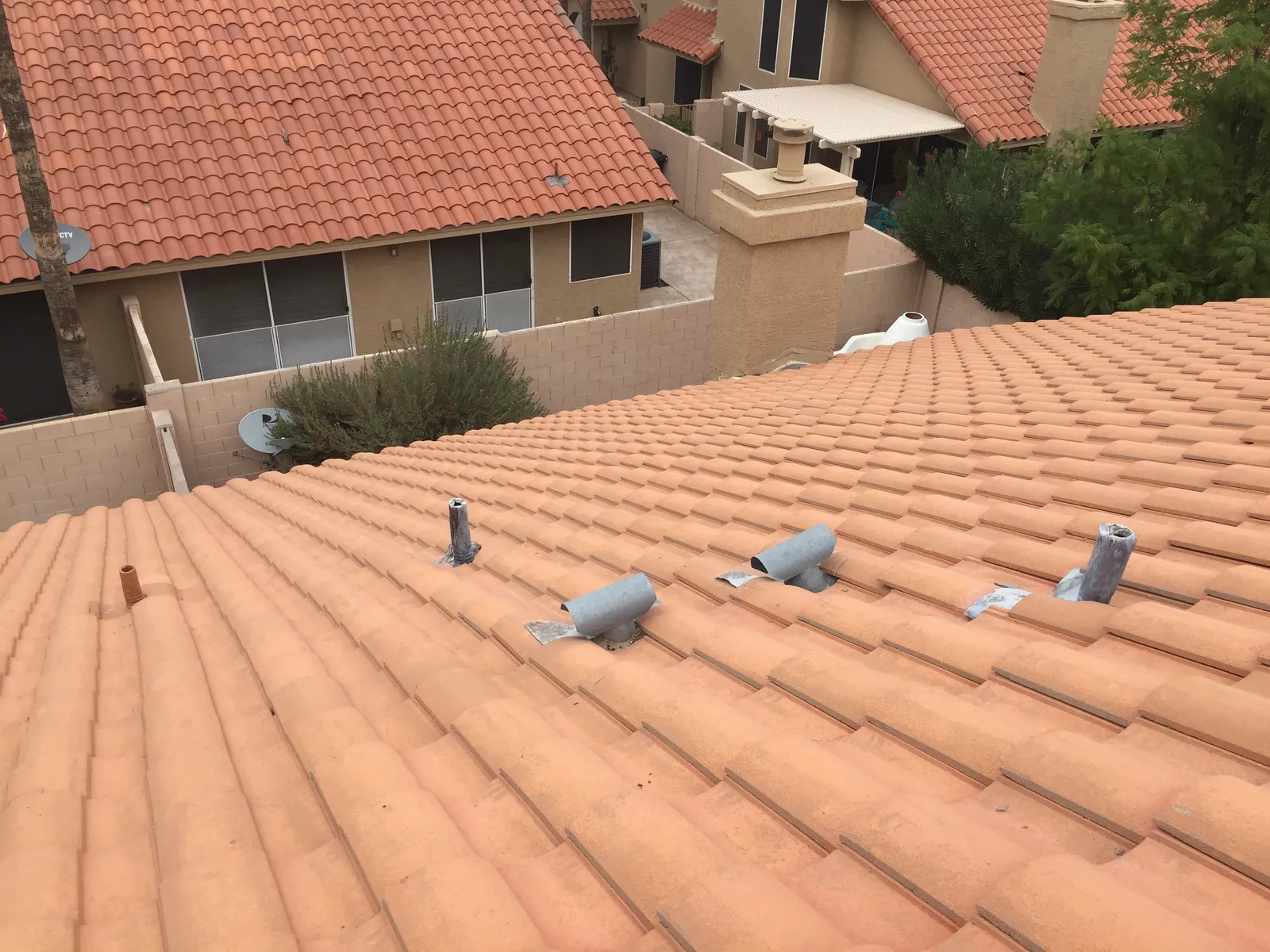
- Attic vents on tile roofs: water gets in where the tile around the vent is cut or fitted badly.
Storm damage shows up here a lot. Callers have told us "I had a roof vent cap that blew off," "I have a vent cover on my roof that blew off during a storm," and "Our ridge vent is folding back from a storm." On one tile roof, a homeowner said the tile around a vent was cut too big, and "the wind is blowing the rain right up those cavities."
By roof type
Vent flashings sit under the tile. Cracked or poorly fitted tile around a vent lets wind-driven rain reach the underlayment, which wears out over time. See tile roof repair.
Rubber pipe boots crack in the sun, and ridge vents can lift in high wind.
Pipes, vents and rooftop AC curbs are sealed into the roof coating. When the coating wears thin around them, water gets in. See flat roof repair.
What to do right now
- 1Put a bucket or towels under the vent and move anything that can get wet.
- 2Note which vent is dripping and when: only in rain, only in heavy rain, or any time the AC runs.
- 3Take dated photos of the vent, any stain around it, and the ceiling nearby.
- 4From the ground, look for a vent cap that's missing or tilted, or a ridge vent that's lifted.
- 5Book a roof checkup before the next storm.
If it's the AC, not the roof
If the vent drips on dry days, the AC is the more likely cause. Lennox, an AC manufacturer, lists a clogged condensate drain line and dirty air filters among the top causes of water dripping from an AC vent. That's a job for an HVAC company, not a roofer.
How a roofer fixes a vent leak
A good vent repair starts with finding the real source of the leak, which is often a few feet from the vent that's dripping. On a free roof checkup, a KY-KO roofer will:
- 1Check every vent, pipe, exhaust cap and rooftop AC opening on the roof
- 2Trace the water path from the drip back to where it gets in
- 3Photograph what's wrong and explain it in plain terms
- 4Give you a written estimate for the repair, such as new flashing or a pipe boot, a new cap, resealing the coating, or replacing tile to match
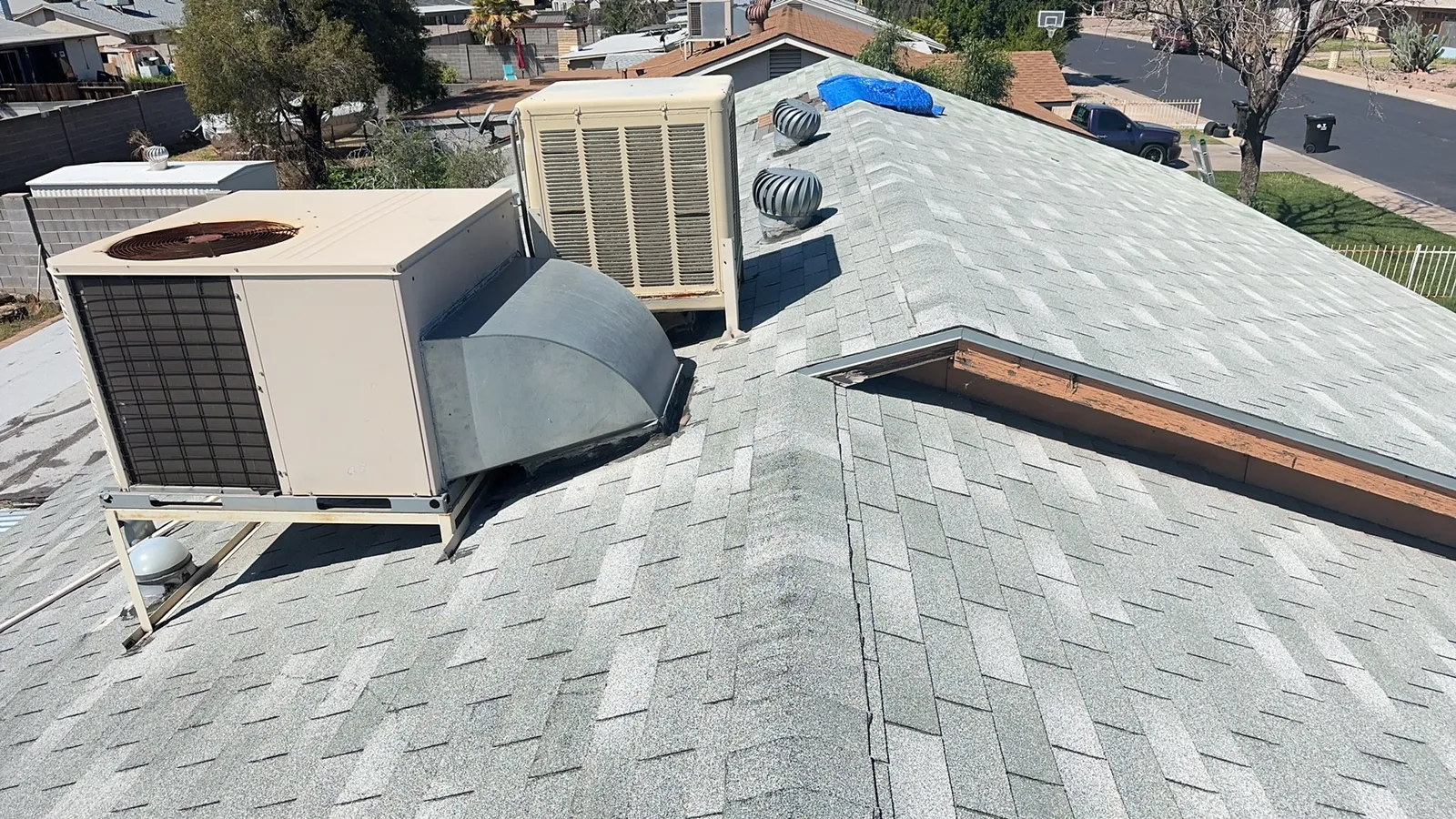
Vents also do an important job in a hot attic. If a vent needs replacing, it's worth reading about roof ventilation for desert homes. We serve Phoenix and the whole Valley.
Ceiling vent leak questions
Why does my bathroom fan drip when it rains?
Can a roof leak come out of an AC vent?
How do I know if it's condensation or a roof leak?
Is a dripping vent an emergency?
Vent dripping after the rain?
Book a free roof checkup. We'll find where the water gets in and give you a written estimate for the fix.