Pre-Monsoon Roof Checkup: What to Look For

In This Guide
- Why Pre-Monsoon Inspection Matters in Phoenix
- Key Takeaways
- What to Check on Your Roof Before Storm Season
- Critical Warning Signs That Need Immediate Attention
- DIY vs. Professional Inspection — Know the Difference
- Monsoon Risks by Roof Type
- Best Timing to Schedule Your Checkup
- Frequently Asked Questions
Valley microbursts have been recorded above 115 mph. A single monsoon storm can drop 1 to 3 inches of rain in under an hour. What starts as a minor roofing issue — a lifted piece of flashing, a cracked tile, a small gap in sealant — can turn into an active interior leak before help arrives. And after that first June 15 storm, help can be weeks away.
This guide walks you through exactly what to check before monsoon season, which warning signs demand professional attention right now, and how KY-KO Roofing’s free roofing checkup fits into your preparation plan.
of Arizona’s total annual rainfall arrives during monsoon season — compressed into weeks of intense, wind-driven storms.
Why Pre-Monsoon Roof Inspection Matters in Phoenix
Phoenix Monsoon Season Delivers Rapid, Concentrated Rainfall
Arizona receives 31.5% of its annual rainfall during monsoon season. That concentration means roofing systems face months of weather stress compressed into weeks of intense, fast-moving storms. Unlike the steady rain that east coast roofs are built to manage, Phoenix monsoon storms arrive suddenly — and leave just as fast. The intensity tests every component of your roof at once.
Flat and low-slope roofs, which are extremely common in the Valley, face particular drainage pressure when an inch of rain falls in under an hour. Strong winds compound the problem by propelling water horizontally rather than vertically, pushing it beneath materials that perform perfectly under normal conditions.
Wind-Driven Rain Exploits Existing Weaknesses
This is the core issue: a roof that’s “fine” during our dry months can fail catastrophically in a monsoon. Wind can push water sideways and even upward beneath tile, shingle, and flashing assemblies designed to shed vertical rain. Sealants, flashings, and underlayment that handle normal rainfall become vulnerable when pressure comes from an unexpected angle. Add months of triple-digit temperatures that have already hardened and cracked those materials — and you have a system that’s stretched thin before the first storm even hits.
This is also why many homeowners only notice a leak during a storm. The water path bypasses surface materials entirely, entering through a gap invisible from the ground.
Contractor Schedules Fill Up Fast
Once monsoon season starts, Phoenix homeowners become acutely aware of leaks and problems that went unnoticed all winter. That surge in service calls means licensed contractors book out 3 to 6 weeks. Emergency repairs during active weather cost more due to urgent scheduling and weather delays. Getting ahead of the rush — in April or May — means proper repairs under optimal conditions, without competing with dozens of emergency calls for the same crews.
Rule of Thumb: Schedule your free roofing checkup in April or May. Once the calendar hits June 15, contractor availability tightens and emergency pricing applies.
Key Takeaways
- Schedule a professional roof inspection in April or May to avoid contractor backlogs and emergency repair costs after June 15.
- Inspect flashings around chimneys, vents, and skylights — these are the most common failure points during wind-driven rain.
- Active water stains on ceilings and soft spots indicate leaks that need professional attention right away.
- Check gutters for proper slope and remove debris that could cause water backup during intense rainfall.
- Keep tree branches 6 to 10 feet from your roofline to prevent wind damage and debris accumulation.
- Roofs over 15 years old need annual professional inspections — don’t wait for a problem to make itself known.
What to Check on Your Roof Before Storm Season
Roofing problems reveal themselves through specific patterns once you know where to look. A systematic pre-monsoon roof checkup covers five critical areas. You can assess most of these from the ground — no ladder required.
1. Roof Surface — Missing or Damaged Materials
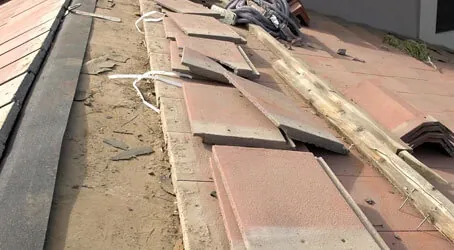
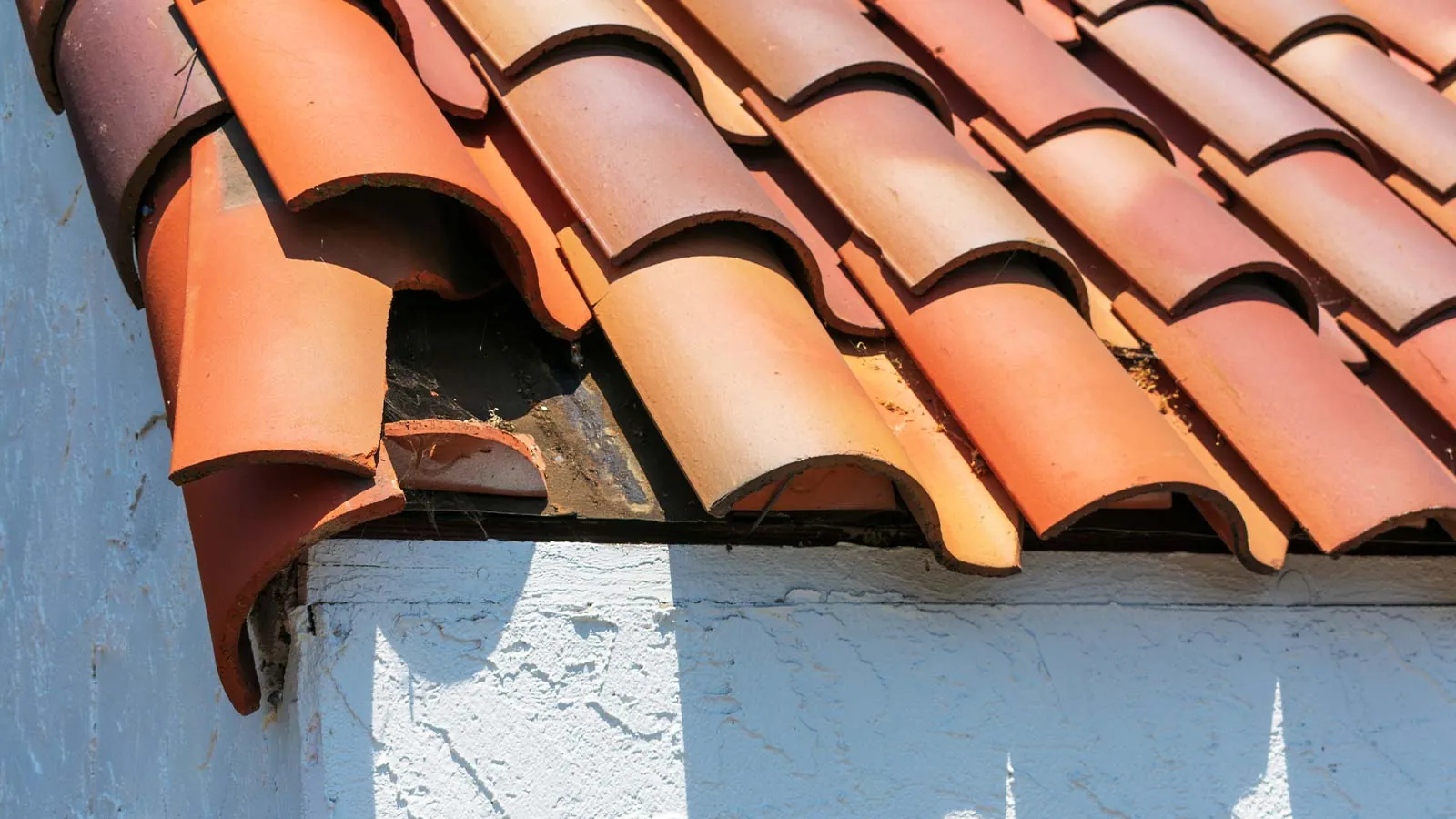
Look along edges, ridges, and hips where wind pressure concentrates. On shingle roofs, hail damage shows up as small dents with granule loss — circular indentations you can sometimes see as dark patches from the ground. Curled or cracked shingles indicate material stress that will fail under monsoon pressure. On tile roofs, look for shifted, cracked, or missing tiles that leave gaps in coverage. A single missing tile is a direct water entry point during wind-driven rain.
2. Flashings at Penetrations and Walls
Flashings are the metal pieces that seal the gaps where roofing material meets a chimney, vent, skylight, or wall. From the ground, look for any section that appears lifted, bent, or separated from the surface. Rust discoloration or gaps along the edges are red flags. Counter-flashing attached only with sealant — rather than mechanical fasteners — fails frequently under temperature cycling and monsoon wind. Step flashing along side walls should remain interlaced with each row of shingles or tiles.
3. Gutters and Drainage
Gutters must slope toward downspouts with no standing water in any segment. Check for sagging caused by loose brackets or screws. Remove leaves, sticks, and debris accumulated since winter. Confirm downspouts direct runoff several feet from your foundation — not against it. If you can safely run water through the system before monsoon season, do it: slow drainage or overflow points during a test run will become serious problems when an inch of rain falls in under an hour. This matters especially for flat roof and low-slope homes where ponding is already a risk.
4. Interior Warning Signs — Attic and Ceilings
Before the first storm hits, check your attic for dampness, mold growth, or water stains on the sheathing. Wet or compressed insulation signals an active or recent leak. Look for daylight visible through the roof deck — any pinhole of light is a future water entry point. On ceilings below chimneys, vents, and skylights, check for brown staining or paint bubbling. Press gently on any stained area: if the surface feels soft or spongy, water has already saturated the drywall.
5. Tree Branches and Overhangs
Keep branches at least 6 to 10 feet from your roofline. During a microburst, limbs whip across shingles and strip away the granule layer that protects against UV degradation. Overhanging branches also provide direct pest access to your attic and deposit debris into gutters year-round. Trim before storm season — not after.
Critical Warning Signs That Need Immediate Attention
The items below aren’t “watch and wait” problems. Each one represents an active or imminent failure that will worsen once monsoon storms begin. If you spot any of these, schedule a professional roof repair evaluation before June 15.
- Active water stains on ceilings — Brown rings signal ongoing water intrusion. A stain that worsens after rainfall or feels soft when pressed requires immediate professional evaluation, not caulk.
- Visible gaps in flashing or sealant — Cracked, missing, or separated sealant along flashing edges fails rapidly during monsoon wind. Even a small gap allows water behind the flashing where it can saturate the underlayment.
- Fallen or cracked tiles on the ground — A tile you can see from your driveway means there is an exposed section of underlayment above it. Underlayment degrades quickly under direct sun and will not survive a monsoon season unprotected.
- Sagging roof sections — Any area that appears to bow or sag indicates structural compromise — possibly rotted sheathing from a previous unresolved leak. This is not a repair that can wait.
- Roof over 10 years without an inspection — Schedule a professional inspection regardless of visible damage. Many failure points are not detectable from the ground, and aging materials behave differently under monsoon conditions than under normal weather.
DIY vs. Professional Inspection — Know the Difference
You don’t need to climb onto your roof to do a useful pre-monsoon assessment. A ground-level walk-around catches a significant number of problems — particularly on tile and shingle roofs where surface damage is visible from below. But ground-level checks have limits, and a licensed inspector catches what you can’t.
What You Can Check From the Ground
Missing, cracked, or curling shingles along ridges and edges. Fallen or shifted tiles. Moss, algae, or debris accumulation. Sagging or bowing roof sections. Loose gutter hangers or visibly separated gutters. Tree branches within 10 feet of the roofline.
What a Licensed Inspector Identifies That You Can’t
Underlayment condition and sheathing integrity. Flashing seal quality at penetrations. Vent boot deterioration. Attic ventilation issues that accelerate shingle aging. Hidden moisture intrusion and early-stage mold. Structural load capacity concerns on aging decks.
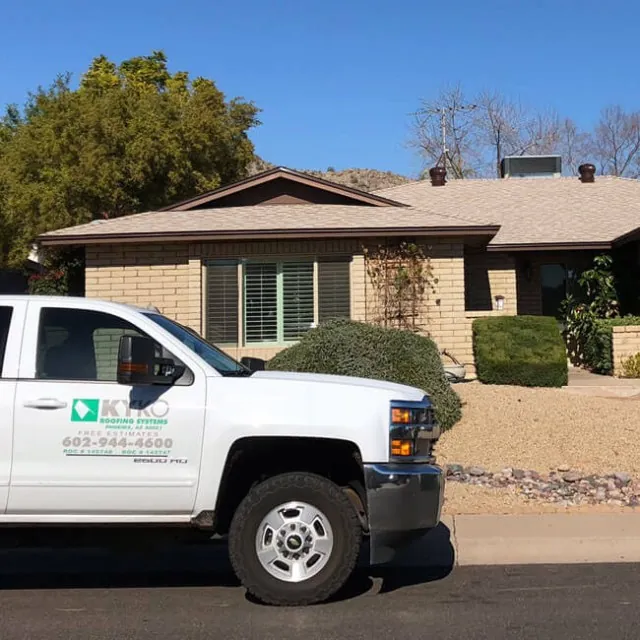
KY-KO Roofing’s free roofing checkup covers both: a licensed roofer gets on the roof, inspects materials and flashings up close, checks the attic when accessible, and reports back to you on the ground with specific findings — no obligation. It’s how they’ve served Valley homeowners since 1994.
Monsoon Risks by Roof Type
Phoenix homeowners have several common roof types, and each faces a different set of monsoon vulnerabilities. Knowing your roof type helps you prioritize what to look for.
Tile Roofs
Tile roofs are durable but not immune to monsoon damage. A microburst can shift or crack tiles that were perfectly intact during dry months. More importantly, the underlayment beneath the tiles — not the tile itself — is what keeps water out. When a tile cracks or falls, the underlayment is exposed directly to sun and rain. Phoenix UV will degrade exposed underlayment within a single season. Check for fallen tiles on the ground and any visible gaps in the field from street level.
Shingle Roofs
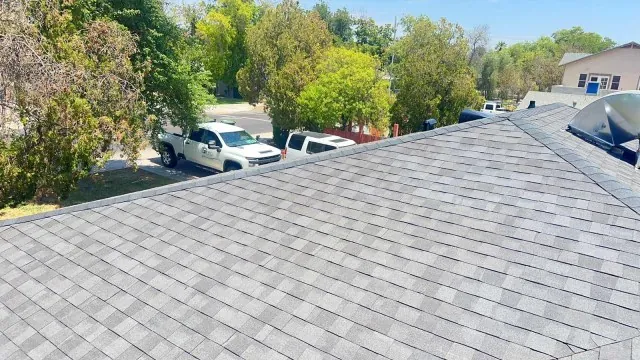
Shingle roofs lose granules through heat cycling and UV exposure all summer before monsoons arrive. That granule loss reduces the shingle’s ability to shed water and resist wind uplift. Look for dark patches or bald spots visible from below — those are areas where the protective coating has worn through. Curled or lifted shingle edges along ridges and rakes are particularly vulnerable to wind-driven rain.
Flat and Foam Roofs
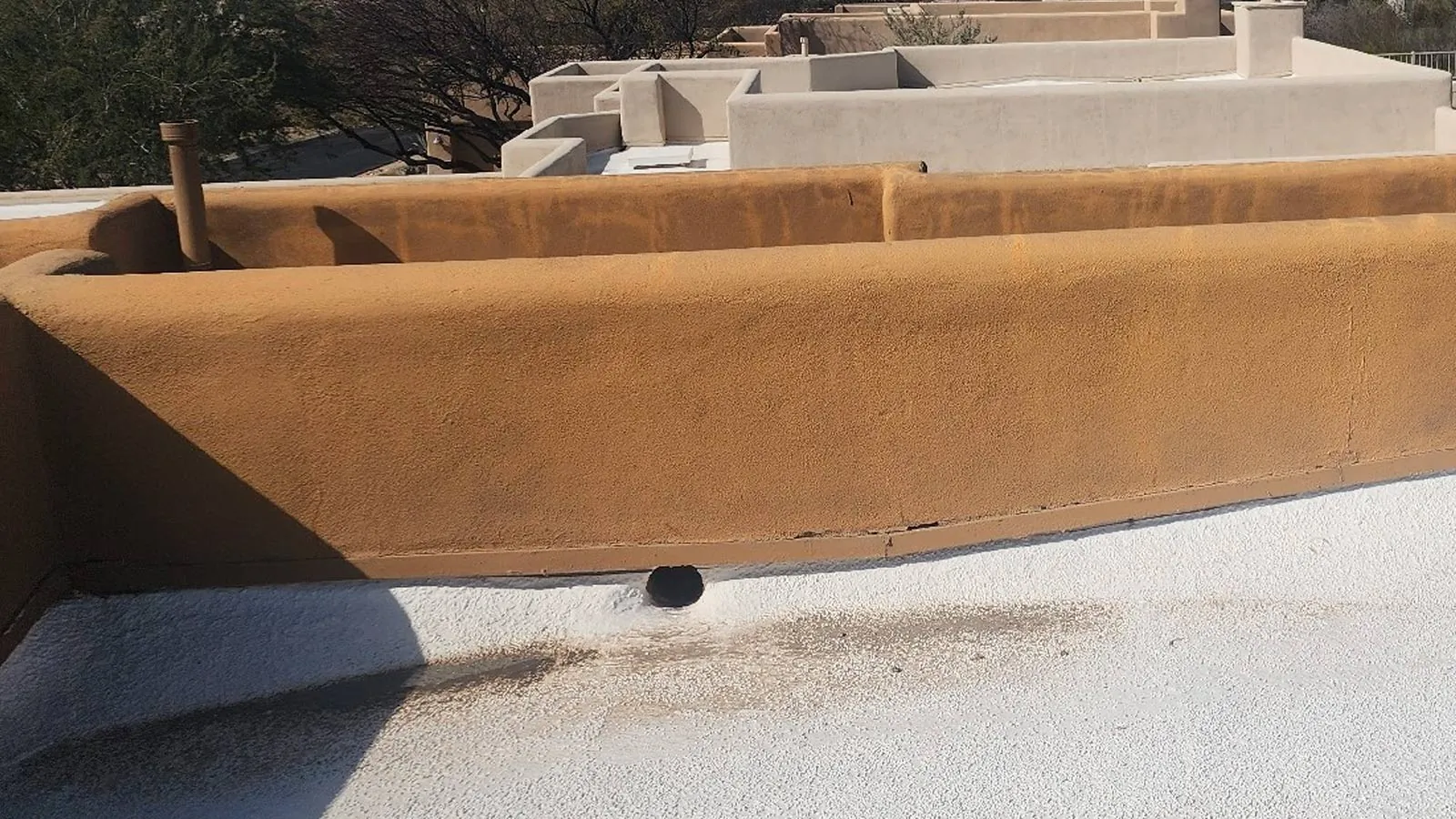
Flat roofs and foam roofs are very common in the Phoenix metro area — on both residential and commercial properties. Their primary monsoon vulnerability is drainage: when a single drain or scupper becomes blocked by debris, water has nowhere to go. Ponding water adds significant structural weight and works its way into any existing seam or crack. Pre-monsoon gutter and drain cleaning is especially critical for flat and low-slope roofs. Foam roofs should also be inspected for any tears or blisters that have developed over the summer.
Best Timing to Schedule Your Pre-Monsoon Checkup
The Phoenix metro area — including Glendale, Scottsdale, Mesa, Tempe, Chandler, Gilbert, and Peoria — follows the same monsoon calendar. June 15 is the official start date, and contractor availability tightens in the weeks before it as homeowners across the Valley act simultaneously.
April and May are the target window. Scheduling your inspection during these months means repairs happen under good weather conditions, with full contractor availability, and without the pricing pressure of emergency scheduling. Waiting until late May or early June still beats waiting until after the first storm — but the window narrows fast.
If your roof is over 15 years old, has had a previous leak, or has not been professionally inspected in more than two years, April is the right month — not May. Older roofs may require more extensive roof repairs that take time to schedule and complete properly. Rushing a repair in June is never the outcome you want.
If the cost of repairs is a concern, KY-KO Roofing offers financing options that can help spread the cost of repairs or replacement with approved credit. Details are on their financing page.
KY-KO’s roofing work is backed by their Owner’s Pride Guarantee — a commitment to using only UL-certified shingles, tiles, and roofing materials on every project. If you have questions about what your existing warranty covers and whether monsoon damage may affect it, review the terms of your current coverage or speak with a licensed contractor about your specific situation.
Frequently Asked Questions
When should Phoenix homeowners schedule a pre-monsoon roof inspection?
Schedule your inspection in April or May, before monsoon season begins on June 15. Roofing contractors typically face 3 to 6 week backlogs once the first storms hit, so early scheduling ensures repairs happen under optimal conditions without emergency pricing.
What are the most common roof failure points during Phoenix monsoon storms?
Flashings around chimneys, vents, and skylights are the most common failure points. Wind-driven rain pushes water horizontally and upward beneath these metal pieces, exploiting any gap, rust spot, or section that has pulled away from the roofing surface. Check these areas closely during any pre-monsoon inspection.
How does wind-driven rain damage roofs differently than normal rainfall?
Wind-driven rain pushes water horizontally and even upward beneath shingles, tiles, and flashing that normally shed vertical rainfall without any issue. This lateral water pressure bypasses the overlapping design of standard roofing materials, exploiting weaknesses that would never be vulnerable under typical weather conditions.
What interior warning signs indicate an active roof leak?
Brown rings or stains on ceilings are a reliable indicator of active leaks. If the stained area feels soft or spongy when pressed, water has already saturated the drywall. Mold or mildew near stains confirms ongoing moisture exposure. Stains located directly below chimneys, skylights, or vent pipes typically point to flashing failure.
How far should tree branches be kept from a roof in Phoenix?
Keep tree branches at least 6 to 10 feet away from your roofline. Overhanging limbs scrape shingles during high winds, wearing away the protective granule layer and accelerating premature aging. Branches also provide pest access to your attic and drop debris that clogs gutters and retains moisture against roofing materials.
How often should older roofs in Phoenix be professionally inspected?
Roofs over 15 years old should be professionally inspected every year. If you cannot remember your last evaluation or more than two years have passed, schedule an inspection before monsoon season begins. Annual checkups catch small problems before they become expensive emergencies, particularly during the 15 to 20 year lifespan window when repair-versus-replace decisions become more common.
What percentage of Arizona’s annual rainfall falls during monsoon season?
Arizona receives roughly 31.5% of its total annual rainfall during monsoon season, which runs from June 15 through late September. This compressed intensity means roofing systems face months worth of weather stress in just a few weeks, making pre-monsoon preparation especially important for Valley homeowners.
Does KY-KO Roofing offer free inspections before monsoon season?
Yes. KY-KO Roofing offers free roofing checkups to homeowners and businesses throughout the Phoenix metro area, including Mesa, Tempe, Chandler, Gilbert, Peoria, Glendale, and Scottsdale. A licensed roofer will inspect your roof and report back on its condition and any recommended repairs, with no obligation.
Don’t Wait for the First Storm to Find Out
KY-KO Roofing has served Valley homeowners since 1994. Schedule your free pre-monsoon roof checkup in April or May — before contractor schedules fill and emergency pricing kicks in.
Schedule My Free Checkup Learn About Roof RepairsGet a free roofing checkup.
A licensed KY-KO roofer inspects your roof, documents anything the desert threw at it, and gives you a straight answer — repair, recoat, or replace.